By clicking “Accept,” you agree to the use of cookies and similar technologies on your device as set forth in our Cookie Policy and our Privacy Policy. Please note that certain cookies are essential for this website to function properly and do not require user consent to be deployed.
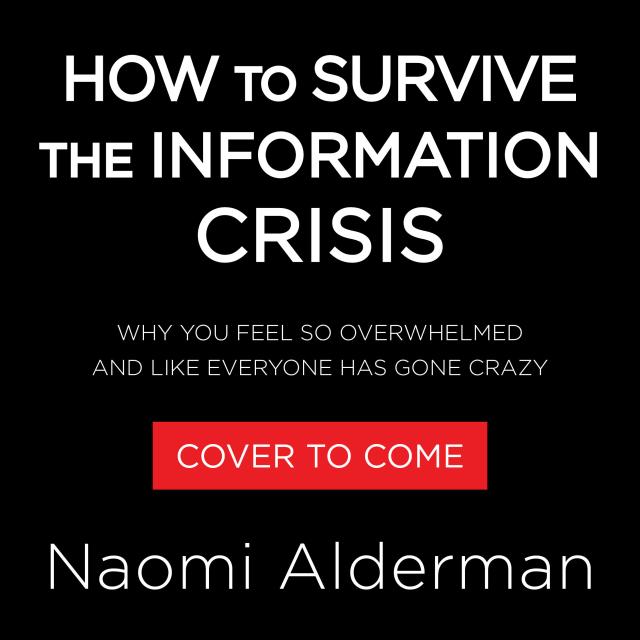
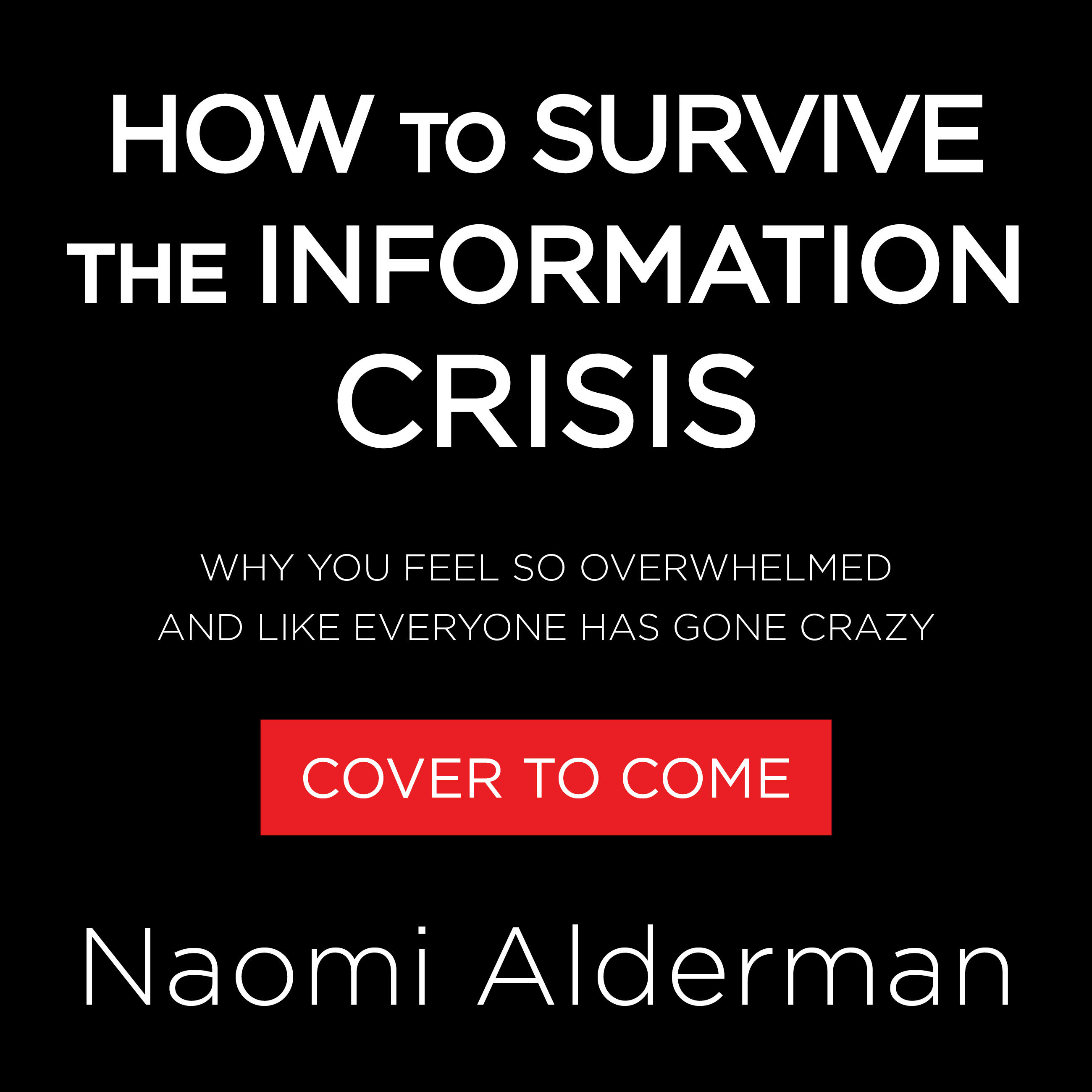
How to Survive the Information Crisis
Why Utter Nonsense Is Making Us Feel Overwhelmed, Alone, and Angry—and How to Reclaim Our Sanity
Contributors
Formats and Prices
- On Sale
- Apr 27, 2027
- Publisher
- Hachette Audio
- ISBN-13
- 9781668661239
Price
$24.99Format
Format:
- Audiobook Download (Unabridged) $24.99
- Hardcover $29.00 $39.00 CAD
Preorder from Retailers:
Why does everything feel so unpredictable, emotionally-charged and exhausting right now? Award-winning, bestselling author Naomi Alderman offers an electrifying way to understand our era, and regain your sanity.
News stories rise up dramatically and then seem at once to fade away to nothing. It’s been a long time since you hung out with a bunch of your friends in real life, but their social media posts are full of vicious arguments that don’t even sound like them. Half the people you know are “doing their own research” and coming to conclusions that sometimes make you actually scared for them. The more you learn about the world, the less you feel you understand—and if you used to think of yourself as someone who wanted to remain “engaged” with current affairs, now it just feels incredibly overwhelming.
If any of this sounds like your experience of the 2020s, you’re not alone. In fact, we’re not alone in history. We’re living through an information crisis, and as Naomi Alderman explains in this incisive and thought-provoking book, the good news is that it’s not the first time in history it’s happened. And we do get through it.
Ranging widely across history, philosophy, cognitive science, and literature, Alderman draws out the parallels between what’s happening now and what happened in the previous two information crises: the invention of writing, and the invention of printing. Looking back through history, we can see how those technologies drastically reshaped our perceptions, interactions and mental landscapes. Overwhelmed by information, people become afraid and angry, unsettled and distressed—but also more knowledgeable, educated, and curious.
There is hope here as well as fear: by learning from history about how humanity has survived previous information crises, Alderman charts a way through these turbulent times and explains how—as individuals and as a society—we can learn to weather the storm, ignore irrelevant noise, and steer toward the many good things an information crisis brings in its wake: ways of living and thinking together that are enjoyable, long-lasting, and sane.