By clicking “Accept,” you agree to the use of cookies and similar technologies on your device as set forth in our Cookie Policy and our Privacy Policy. Please note that certain cookies are essential for this website to function properly and do not require user consent to be deployed.

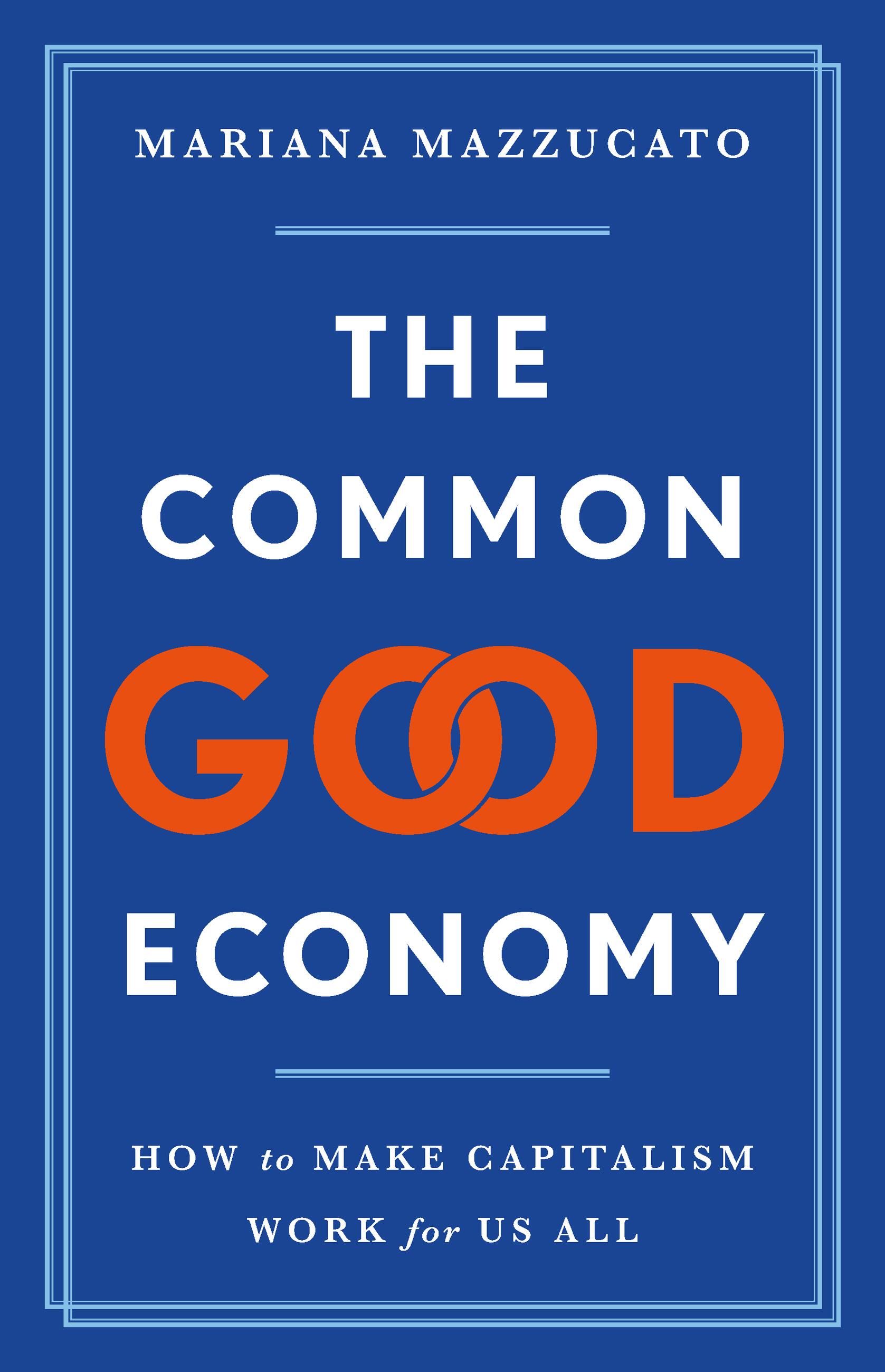
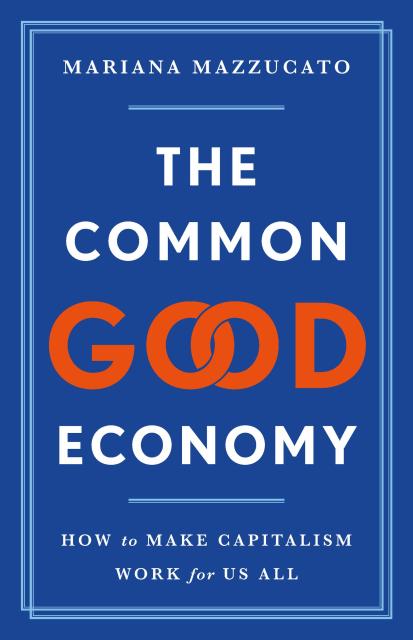
The Common Good Economy

How to Make Capitalism Work for Us All
Coming Soon

Contributors

By Mariana Mazzucato

Formats and Prices

On Sale
Sep 8, 2026
Page Count
352 pages
Publisher
Basic Venture
ISBN-13
9781541609358

Price

$18.99

Price

$24.99 CAD

From the award-winning author of The Entrepreneurial State and Mission Economy, an inspiring call to solve our deepest challenges—from inequality to climate change—by embracing a radical new approach to economics and the economy

Whether it’s the water crisis, widespread poverty, or the next global pandemic, the problems that threaten humanity require collective action. But policymakers are confronting these problems armed with economic models that are missing one crucial element: They do not treat the common good as an objective worth achieving.

In this ambitious and timely new book, economist Mariana Mazzucato issues a corrective to prevailing economic thinking by defining a new theory of economics with the common good at its center. She shows how to go beyond fixing markets around the edges and instead reshape them to embody principles of reciprocity rather than extraction, and collectivism rather than individualism. It is not enough, she argues, to talk about “public goods” and the “commons”; we must truly achieve the “common good.” Drawing on wide-ranging philosophical traditions and global examples where seeds of the common good are found, Mazzucato reveals how common-good economics can help systematically transform how we build community and an economy that serves all.

The Common Good Economy is a stirring call for governments, the private sector, and everyday people to act boldly to achieve the greater good.

  • “A great book on how to rebuild the economy and our society by putting the common good at the center. A vital read.” 
    Thomas Piketty, New York Times bestselling author of Capital in the Twenty-First Century

Mariana Mazzucato

About the Author

Mariana Mazzucato (PhD, CBE, FREcon) is Professor in the Economics of Innovation and Public Value at University College London (UCL), where she is founding director of the UCL Institute for Innovation & Public Purpose. She is winner of international prizes including the Grande Ufficiale Ordine al Merito della Repubblica Italiana in 2021, Italy’s highest civilian honour; the 2020 John von Neumann Award; the 2019 All European Academies Madame de Staël Prize for Cultural Values; and the 2018 Leontief Prize for Advancing the Frontiers of Economic Thought. She is a member of the UK Academy of Social Sciences (FAcSS) and the Italian Academy of Sciences Lincei. In 2025, she was appointed Commander of the British Empire (CBE) for services to economics in the King’s Birthday Honours List. Pope Francis appointed her to the Pontifical Academy for Life for bringing “more humanity” to the world.

Her award-winning books include: The Entrepreneurial State: Debunking Public vs. Private Sector Myths (2013), The Value of Everything: Making and Taking in the Global Economy (2018), Mission Economy: A Moonshot Guide to Changing Capitalism (2021), and The Big Con: How the Consulting Industry Weakens our Businesses, Infantilizes our Governments and Warps our Economies (2023). She advises policymakers around the world on innovation-led inclusive and sustainable growth. Her policy roles include: Chair of the World Health Organization’s Council on the Economics of Health for All, Co-Chair of the Global Commission on the Economics of Water, member of the South African President’s Economic Advisory Council, Co-Chair of the Group of Experts to the Brazilian 2024 G20 Task Force for the Global Mobilization against Climate Change, and Special Representative of President Ramaphosa to the 2025 G20 Taskforce 1 on Inclusive Economic Growth, Industrialization, Employment, and Reduced Inequality.

Learn more at marianamazzucato.com

Learn more about this author